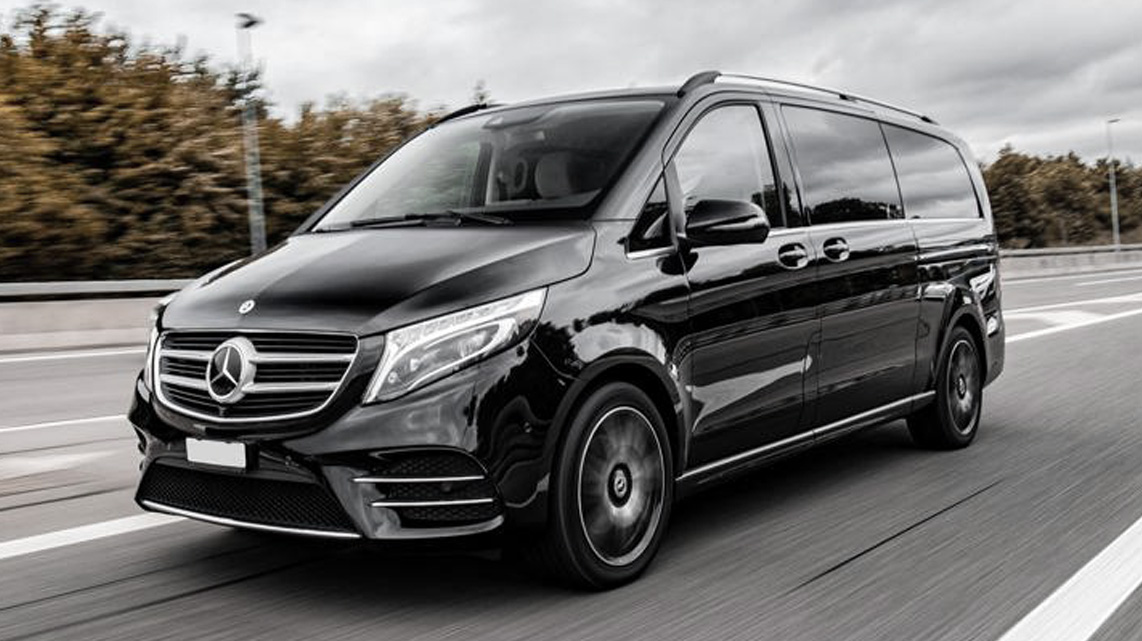
In the upper echelons of international finance, private wealth management, and multilateral diplomacy, mobility is never merely a matter of transit. In Switzerland—a nation defined by its sovereign banking institutions, premier global summits, and world-class luxury resorts—ground travel functions as a direct extension of executive operational capability. Moving seamlessly between corporate headquarters on Zurich’s Paradeplatz, diplomatic enclaves in Geneva, and exclusive alpine retreats requires a level of precision, technical sophistication, and discretion that conventional transport options cannot deliver.
An executive chauffeur service engineered for Ultra-High-Net-Worth Individuals (UHNWIs), family offices, and C-suite leadership must operate on three non-negotiable principles: structural time integrity, total information security, and uncompromising mechanical reliability across demanding alpine terrains.
1. The Temporal and Strategic Imperatives of Executive Mobility
For global decision-makers, time is the scarcest capital asset. A standard delay or logistical friction does not merely cause inconvenience; it disrupts high-stakes negotiations, compromises board-level schedules, and introduces unmanaged operational risk.
Executive ground transport in Switzerland is architected around strict Service Level Agreements (SLAs) with a measured on-time performance benchmark exceeding 99.8%99.8%. Achieving this standard involves far more than navigating via public GPS systems. It requires a dedicated operations desk that actively models urban traffic flow, monitors real-time cantonal road works, and interfaces directly with private aviation flight tracking systems.
The passenger cabin serves as a mobile command post. Within this private sanctuary, executives require an acoustically isolated environment equipped with encrypted connectivity to conduct high-stakes communications, prepare for multi-party acquisitions, or decompress between international commitments without external intrusion.
2. Alpine Engineering, Active Safety, and Fleet Dynamics
Traversing the Swiss landscape demands mastery over sharp topographical and meteorological contrasts. A journey that begins on the high-speed motorways of the Central Plateau often terminates at elevations exceeding 1,500 m1,500 m on snow-packed alpine passes. Sustaining passenger comfort and safety across these environments requires advanced automotive engineering.
Predictive All-Wheel Drive and Dynamic Torque Vectoring
Reaching premier destinations such as St. Moritz, Gstaad, Zermatt, Verbier, and Davos during peak winter conditions necessitates continuous, adaptive traction. The fleet utilizes permanent all-wheel-drive architectures enhanced by intelligent torque vectoring. By continuously analyzing wheel-speed differentials, yaw rates, and lateral acceleration, the vehicle dynamically channels propulsion to the specific wheel with optimal surface grip within milliseconds. For agile urban transfers, executive fast-response requirements, or dynamic private journeys, performance-engineered vehicles like the CLA35 AMG deliver immediate handling precision coupled with uncompromising all-weather stability.
Predictive Active Suspension and Kinematic Comfort
High-altitude mountain corridors are inherently taxing on passenger physiology due to lateral g-forces and road surface irregularies. Active predictive suspension systems address this by deploying optical stereo cameras to scan the roadway ahead. The chassis control unit adjusts damping resistance at each individual wheel before encountering road imperfections, virtually eliminating pitch and roll. This stabilization ensures that executives can work seamlessly on screens or rest without experiencing motion fatigue.
Thermal-Tire Management and Severe-Weather Preparedness
During the winter season, all fleet vehicles operate exclusively on certified high-silica winter compounds featuring self-locking sipes. These tires retain elasticity well below −15∘C, maintaining short braking distances on hard-packed snow and hidden black ice. Telemetric monitoring systems continuously track internal tire pressures and carcass temperatures to prevent performance degradation over sustained high-speed highway transit.
3. Aviation Integration: FBO Coordination and Airside Protocols
The critical link in ultra-luxury travel lies at the interface between private aviation and ground transit. Ground handling must match the precision of private jet operations.
- Geneva Airport (GVA): Dedicated integration with Private Aviation Terminal 3 and elite Fixed-Base Operators (FBOs), including Jet Aviation and Signature Flight Support. Chauffeurs operate in alignment with diplomatic protocols tailored for permanent missions to the United Nations and sovereign delegations.
- **Zurich Airport (ZRH): All-Wheel Drive and Dynamic Torque Vectoring
Reaching premier destinations such as St. Moritz, Gstaad, Zermatt, Verbier, and Davos during peak winter conditions necessitates continuous, adaptive traction. The fleet utilizes permanent all-wheel-drive architectures enhanced by intelligent torque vectoring. By continuously analyzing wheel-speed differentials, yaw rates, and lateral acceleration, the vehicle dynamically channels propulsion to the specific wheel with optimal surface grip within milliseconds. For agile urban transfers, executive fast-response requirements, or dynamic private journeys, performance-engineered vehicles like the CLA35 AMG deliver immediate handling precision coupled with uncompromising all-weather stability.
Predictive Active Suspension and Kinematic Comfort
High-altitude mountain corridors are inherently taxing on passenger physiology due to lateral g-forces and road surface irregularies. Active predictive suspension systems address this by deploying optical stereo cameras to scan the roadway ahead. The chassis control unit adjusts damping resistance at each individual wheel before encountering road imperfections, virtually eliminating pitch and roll. This stabilization ensures that executives can work seamlessly on screens or rest without experiencing motion fatigue.
Thermal-Tire Management and Severe-Weather Preparedness
During the winter season, all fleet vehicles operate exclusively on certified high-silica winter compounds featuring self-locking sipes. These tires retain elasticity well below −15∘C−15∘C, maintaining short braking distances on hard-packed snow and hidden black ice. Telemetric monitoring systems continuously track internal tire pressures and carcass temperatures to prevent performance degradation over sustained high-speed highway transit.
4. Aviation Integration: FBO Coordination and Airside Protocols
The critical link in ultra-luxury travel lies at the interface between private aviation and ground transit. Ground handling must match the precision of private jet operations.
- Geneva Airport (GVA): Dedicated integration with Private Aviation Terminal 3 and elite Fixed-Base Operators (FBOs), including Jet Aviation and Signature Flight Support. Chauffeurs operate in alignment with diplomatic protocols tailored for permanent missions to the United Nations and sovereign delegations.
- Zurich Airport (ZRH): Direct access protocols at the General Aviation Center (GAC), facilitating direct tarmac-side vehicle positioning, private customs clearance handling, and expedited baggage logistics.
- EuroAirport Basel-Mulhouse (BSL): Seamless navigation of tri-border customs jurisdictions between diplomatic decorum, presenting immaculate grooming, professional etiquette, and multilingual fluency (English, French, German, and Italian). This ensures natural, unobtrusive communication with international delegations and high-profile private families.
Intimate Regional Topography
Chauffeurs possess comprehensive mental mapping of Switzerland’s urban centers, private banking entrances, five-star hotel underground secure bays, private clinic access points, and secondary mountain bypass routes, allowing instantaneous rerouting around unpredicted congestion.
5. Architectural Comparison: Executive Fleet vs. Standard Ride Solutions
Selecting ground transportation for executive operations requires a clear evaluation of operational capabilities:
- SLA and Punctuality Assurance: Standard hailing platforms operate on variable algorithm-driven availability. Dedicated executive chauffeur services guarantee pre-allocated vehicle availability backed by an audited 99.8% punctuality rate and redundant backup vehicles.
- Information Governance: Generic transportation services provide no legal guarantees regarding passenger confidentiality. An executive service operates within a legally enforced data-security framework protected by binding NDAs and private dispatch systems.
- Vehicle Engineering and Alpine Readiness: Mass-market fleets rely on entry-level vehicles with standard all-season tires. Executive fleets feature long-wheelbase platforms equipped with dynamic all-wheel drive, active body-roll stabilization, and high-performance winter tire compounds rated for severe alpine terrain.
- Operations Command Integration: Unlike independent app-based drivers, executive chauffeurs are supported by a 24/7 central operations desk monitoring airspace telemetry, live road telemetry, and private terminal clearances.
Elevating Executive Ground Mobility in Switzerland
In the world of executive leadership and global wealth governance, excellence is defined by the absence of compromise. Ground mobility must be silent, punctual, structurally redundant, and impervious to climate and traffic disruptions. By uniting cutting-edge vehicle engineering, deep aviation logistics, and uncompromising discretion, Elimo delivers the definitive executive transport standard across Zurich, Geneva, Basel, and the Swiss Alps.